
Closing Events, 4-7pm January 31
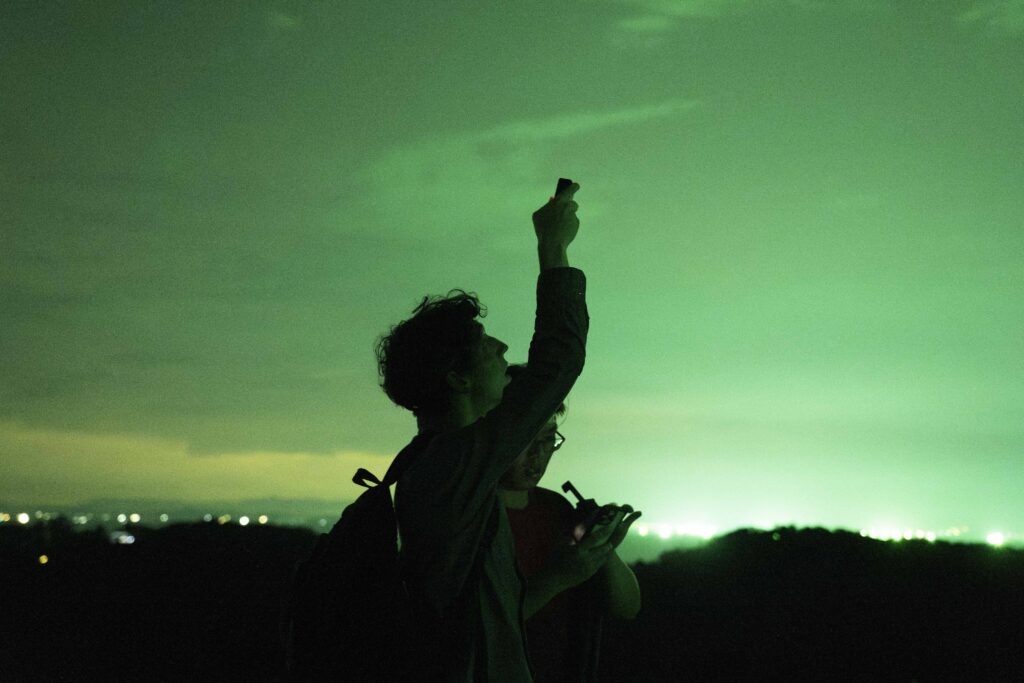
Tristan Finazzo
Conversation with Tristan Finazzo
4-6pm
Moderators: Brian Holmes and Claire Pentecost (Watershed)
Panelists: Tristan Finazzo, Chang-Ching “Casper” Su, Rhett Tsai (Luring Offline), Jessica Zi Chen
Rhett Tsai will take part in the event by presenting the interactive text-based program Luring Offline (钓无线), in which the texts are made available for viewers to lure, watch, and listen to
Tristan Finazzo is currently working as a sustainability ambassador for NASA. He supports strategic communications for the Electrified Powertrain Flight Demonstration (EPFD) project and its goal of realizing the world’s first megawatt-class hybrid electric aircraft. He recently graduated with master’s degrees in Global Journalism and East Asian Studies from NYU. As a journalist, he is dedicated to science, sustainability, and East Asia, he is unearthing stories that transcend languages and inspire the leaders of a sustainable future. His diverse background includes testing air filters in Beijing, interviewing North Korean defectors in Seoul, and publishing research on Arctic development, commercial satellites, and geopolitics in Asia. Outside of his professional work, he balances a passion for singing, hiking, and pretending to be knowledgeable about astrophysics.
Performance: Salt Water Thesis by coyote karaoke
6-7pm
coyote karaoke presents a fantastical expanded cinema experience incorporating painted slide projections, digital monitors, and live reading. Drifting across image, sound, and texture, the performance unfolds a story of salt and water, moving between sea and lake, borders, and migrant cultures shaped by life near water.
About the Performers:
coyote karaoke is an artist group working with expanded cinema, moving image, and performance. Through layered projection, sound, and live narration, their work explores migration, myth, and the movement of images, voices, and beliefs across nature, time, and cultural distance.
Winnie Weiyun Szu is a Taiwanese artist based in Chicago. Working across painting, moving image, and installation, Szu creates atmospheric “landscapes of nowhere” shaped by displacement, language, and aphantasia. Her work explores how material, gesture, and time can build sensory fields that sit between abstraction and landscape.
Lee Yun (b. 1998, Taiwan) is a Chicago-based media artist working across film, video installation, and real-time audiovisual systems. Grounded in experimental cinema and media archaeology, his practice explores how gestures and images translate across time, space, and culture, engaging themes of memory, identity, and historical rupture.

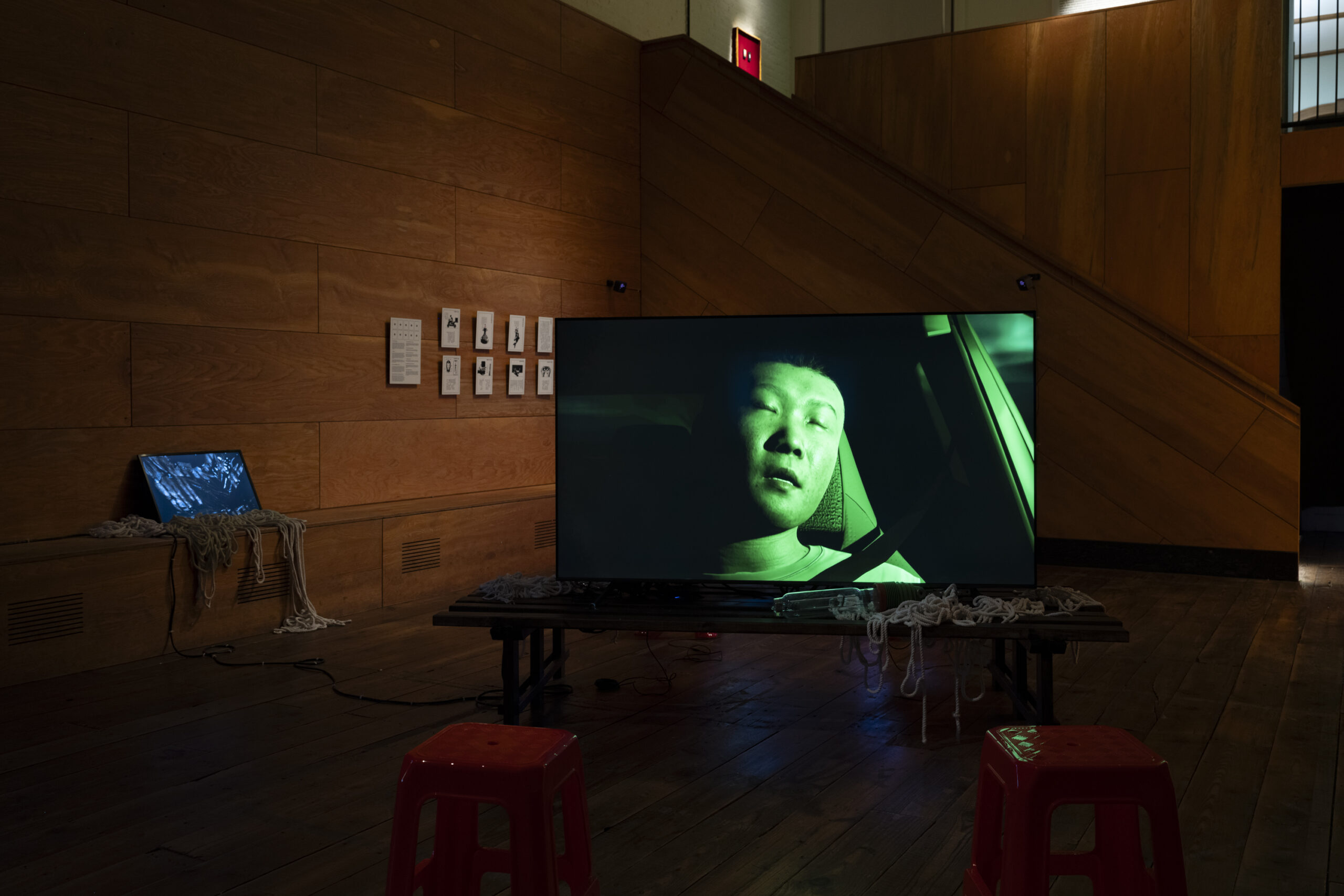
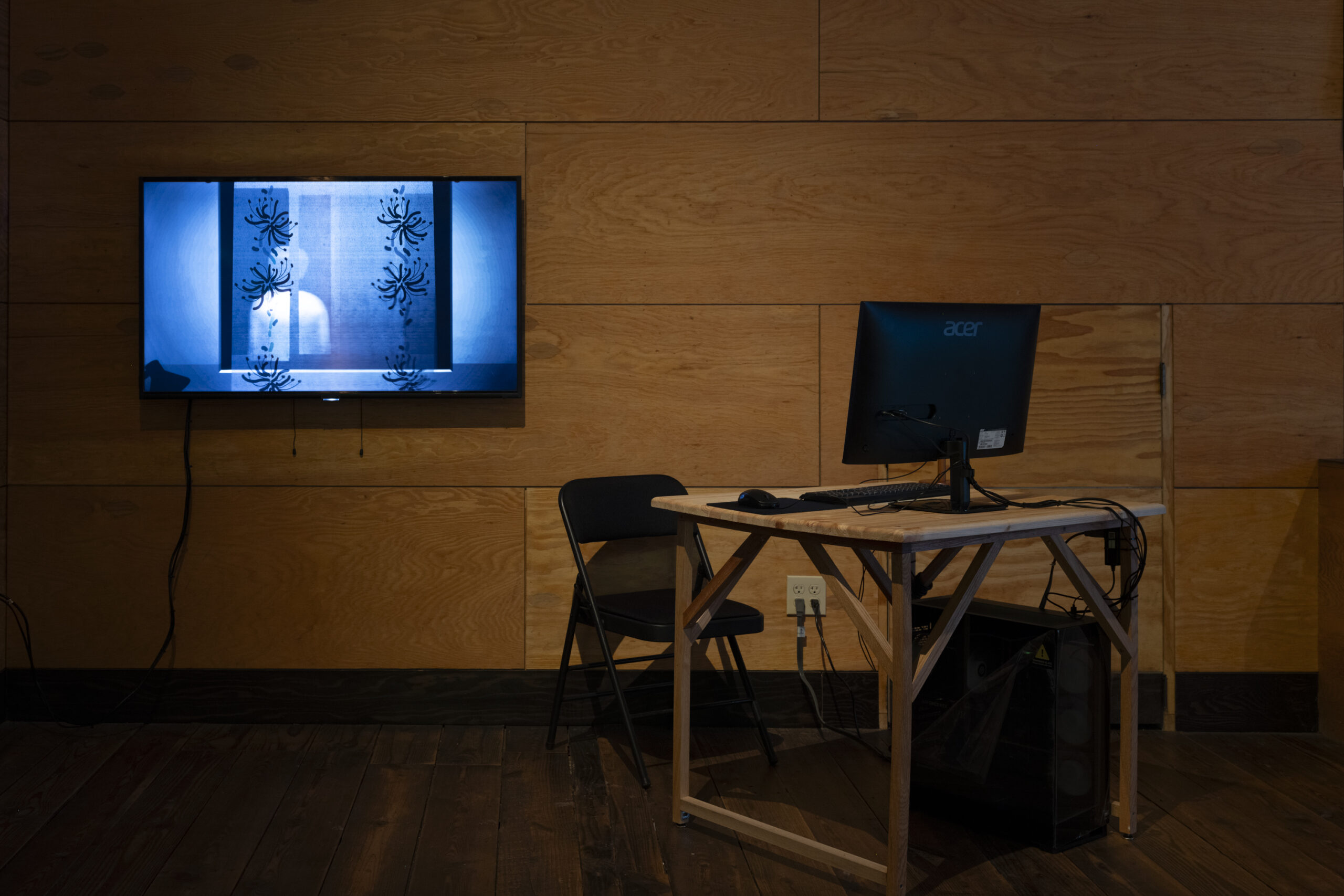
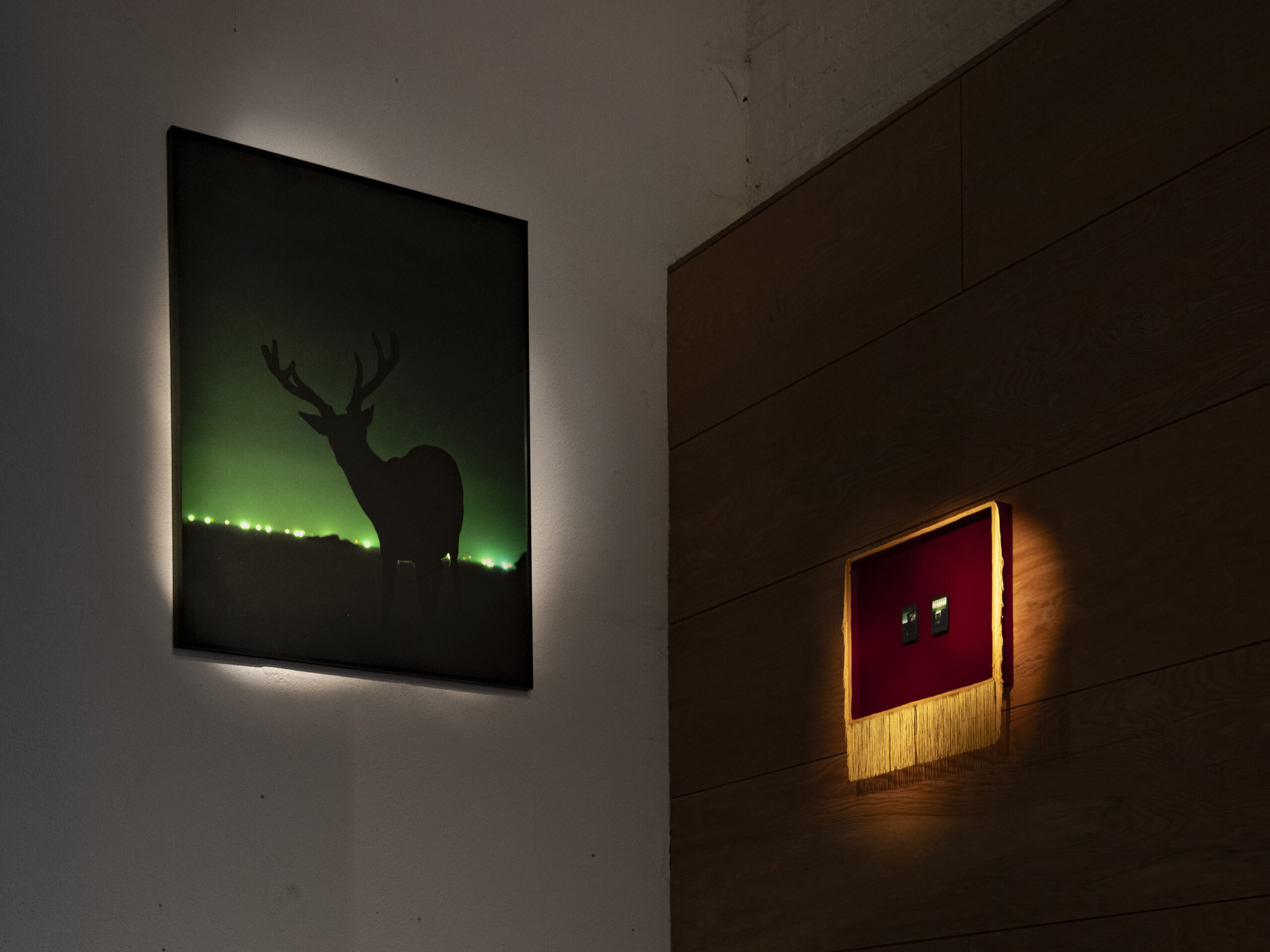
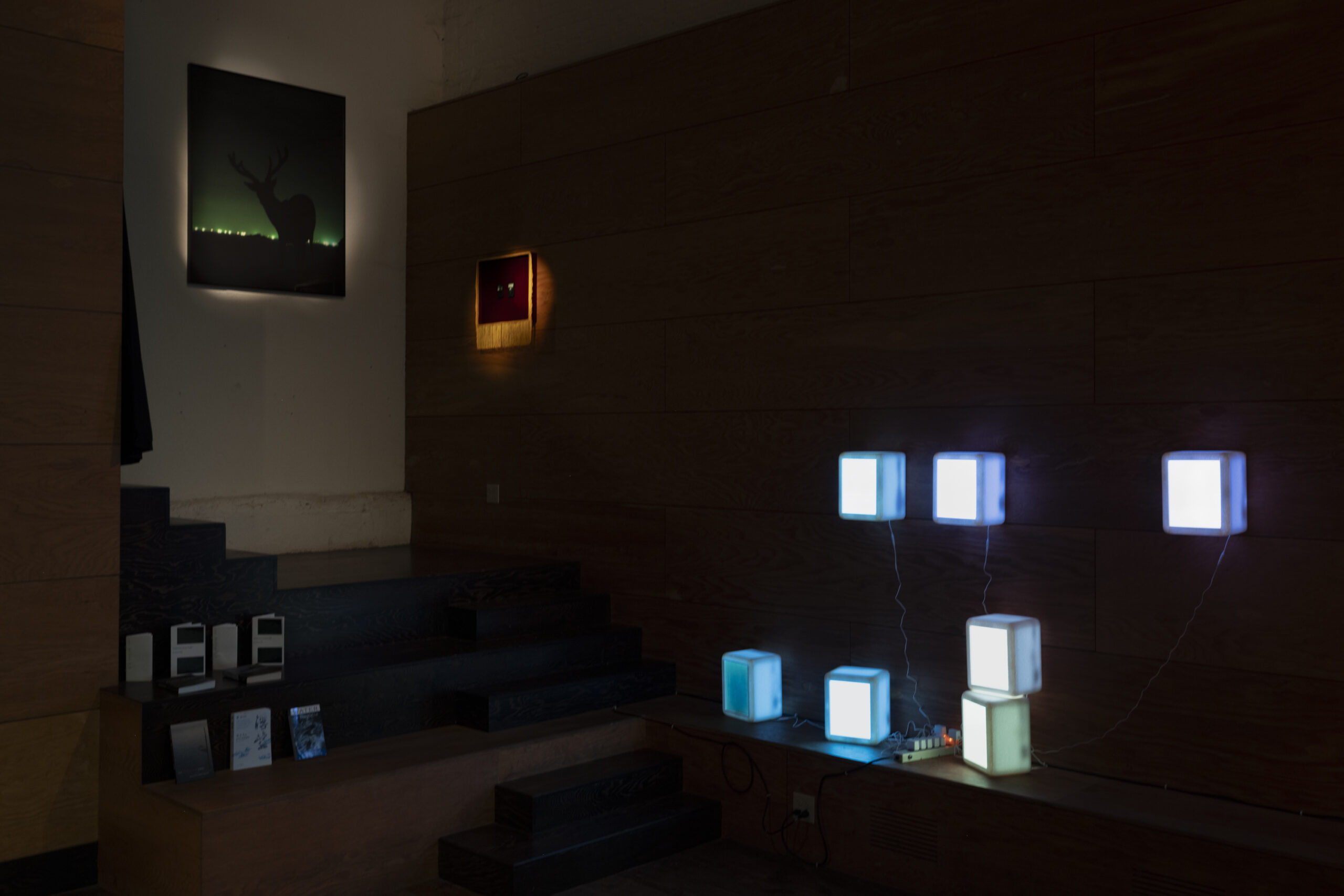
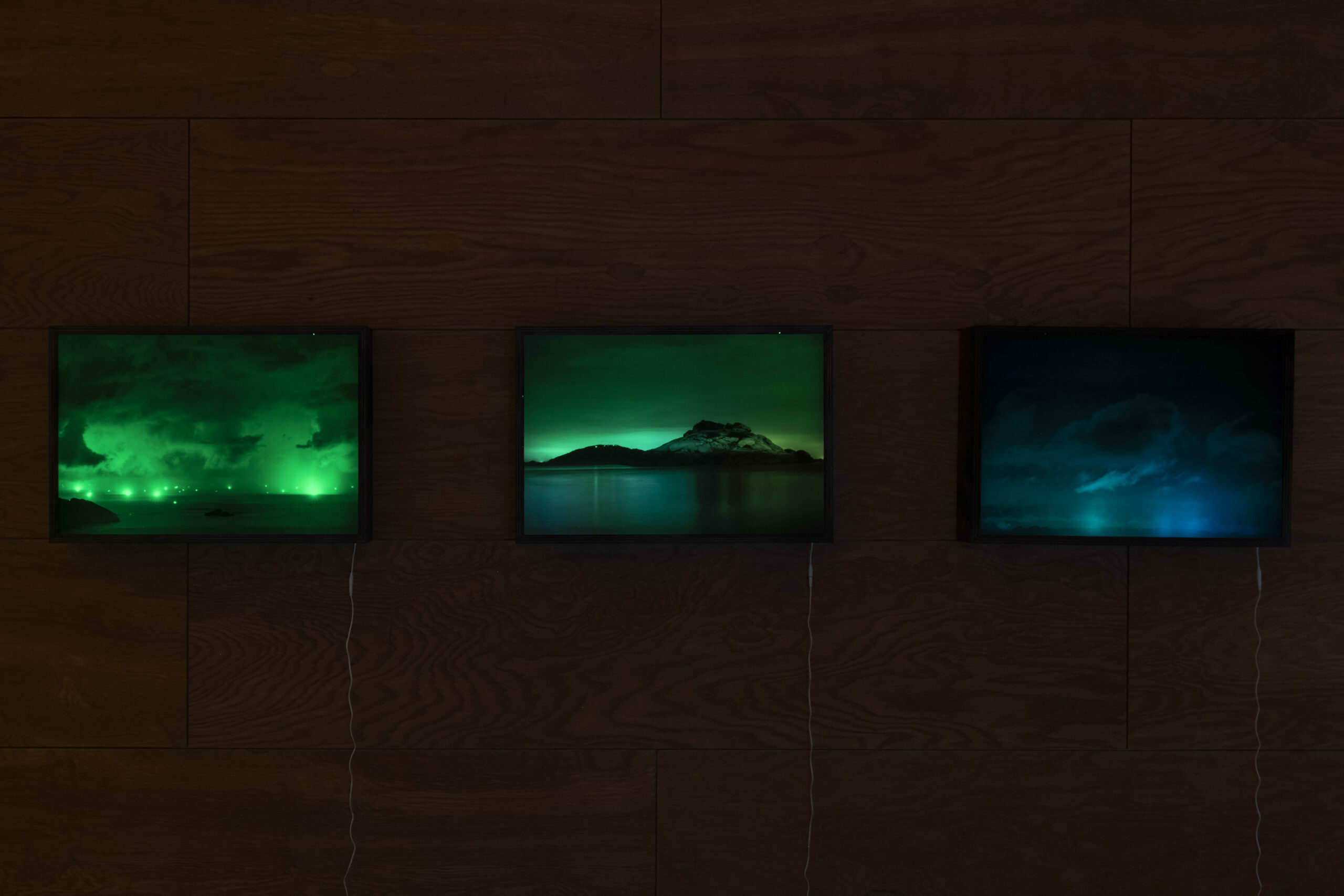
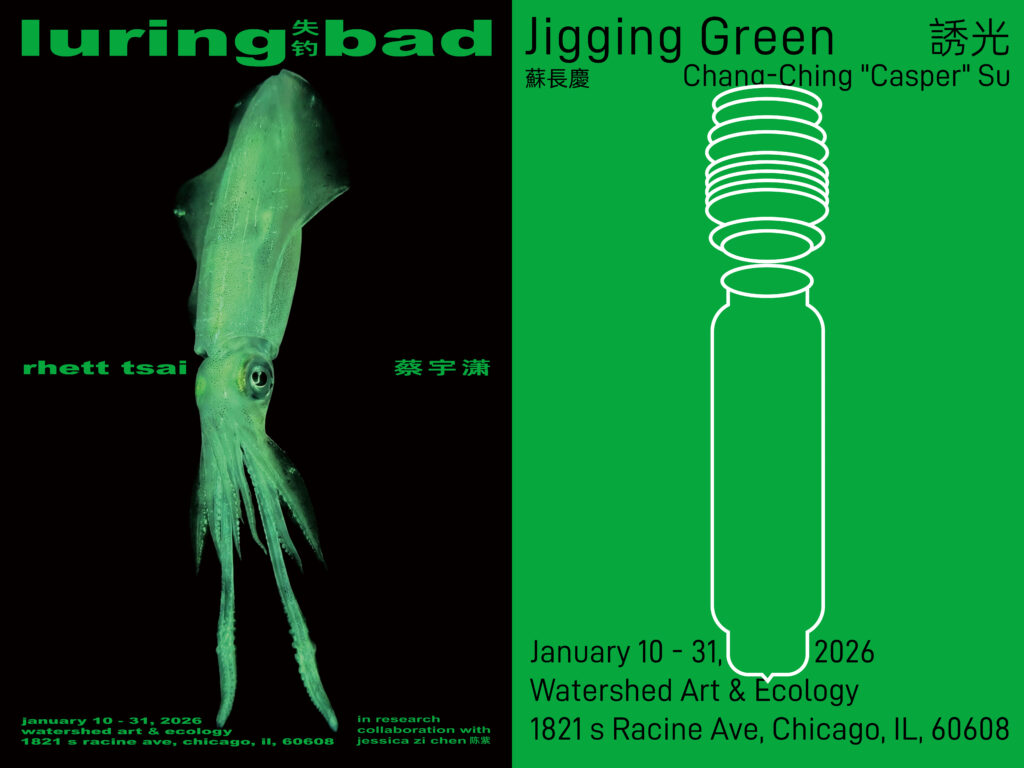
installation shots above / exhibition posters below
Opening with the artists: Saturday, January 10, 2-7 pm.
Performances at 4pm:
Maya Nguyen:
Performance — a gathering of kettlers, pipers, fishers, and musicians
Che Pai:
Blazing and Crackling — a series of associations and responses to the luminous, squid-ish form
Closing discussion: Saturday, January 31, 4-6 pm:
Moderators: Brian Holmes and Claire Pentecost
Speakers: Tristan Finazzo, Casper Chang-Ching Su, Rhett Tsai, Jessica Zi Chen
Watershed Art & Ecology is pleased to present two bodies of work about the global fishing industry: Jigging Green by Chang-Ching “Casper” Su and Luring Bad by Rhett Tsai.
Fishing is a game between the artificial and the natural. From sonic lures to vibration devices, from chemical bait to artificial reefs, humans continually create substitute landscapes and chains of enticement. Across Asian waters, light has become one of the most dominant tools of capture. Its intervention does not merely alter the size of the catch, but also disrupts multispecies rhythms, confuses migratory routes, and clouds the sea with heat and noise, transforming the seascape into a zone of exposure and extraction. One artificial beam after another, cast above and beneath the surface, produces a synthetic spectacle that exceeds the logic of capture itself. From the sky above Jeju Island in South Korea, fields of white fishing lights shimmer like a terrestrial Milky Way; off Pangkor Island in Malaysia, fishing lamps and bioluminescent algae echo each other in chromatic duet; and along the coast of Qida Village in Lianjiang, Fujian, China, the green light of squid-jigging vessels floods the night sky so completely that the village has been dubbed the “Fujian Aurora” on the social media platform
Rednote.
Through experimental practices, both artists ask: How can we learn to perceive, understand, and cultivate care for coastal and aquatic environments structured by artificial illumination? The ghostly glow draws them back through personal and inherited histories of displacement, memory, and technological mediation. Presented concurrently, their works operate as a contemporary reactivation of the pendant format—two independent bodies of work brought into deliberate proximity so that meaning emerges through resonance, contrast, and reciprocal tension rather than simple formal symmetry.
In Jigging Green, Casper Su’s photographic, performative, and video installations probe how power, visibility, and vulnerability are entangled within contemporary lighting systems. For Su, the green skyglow seeping in from the western horizon mediates the spatial politics between nonhuman and human bodies, ecologies, and actions. “Jigging” appears in his work as an act of seduction—mirroring how seeing becomes inseparable from control—and further asks: In a nocturnal environment overtaken by perpetual brightness, how are the shelter and agency once offered by darkness erased and overwritten? What dangers emerge from the loss of “natural darkness”?
In Luring Bad, Rhett Tsai constructs a state of exception at the shoreline through computer-generated imagery, virtual reality, and literary video-game forms. In his works, artificial brightness becomes at once the squid-fishing lamp, the reddened eyes of Fujian’s Tanka people, and the silhouette of ghosts submerged in darkened waters. Under fluorescent seas, squid are driven by light toward their own extinction; fishermen are drawn into an unwaking dream of deep sleep. Through digitally constructed environments, Tsai raises ontological questions of escape, control, and survival.
Accompanying these works are the writings of Jessica Zi Chen, who has investigated artificial light, fishing technologies, and marine life in East Asia from the perspective of “being at the sea’s edge,” a concept raised by Macarena Gómez-Barris in The Extractive Zone: Social Ecologies and Decolonial Perspectives. As Chen notes:
“I understand ‘at the sea’s edge’ as a method: a way of rewriting continent-centered narratives, a penetrating critique of the precarious conditions along the world’s oceanic margins, and an imaginative and practical framework for envisioning strategies of future coexistence.”
Based on research from coastal villages in Fujian, China, Jessica Zi Chen’s fieldnotes will also appear throughout the exhibition and its accompanying public programs. Together with her writing, woven in deep resonance with the artists’ works, Jigging Green and Luring Bad invite viewers to reflect on drifting, displacement, and ecological transformation, and to examine how the intertwined mechanisms of luring, deception, and capture continue to operate, seductively and unsettlingly, across today’s sensorial, technological, and synthetic landscapes.
Jigging Green was supported, in part, by a Foundation for Contemporary Arts Emergency Grant, and by the Department of Cultural Affairs, Taipei City Government
Luring Bad was supported, in part, by Center for the Humanities, Washington University in St. Louis
Socials/Websites:
Casper – IG @asas.12348/ Website: www.chang-ching-su.com
Rhett – IG @rhett.tsai/ Website: www.rhetttsai.com
Jessica – IG @jessicazichen